Paru and the Forest that Grew too Warm
Long ago, when the forests of the Philippines still whispered to the moon, when rivers remembered every song they had ever sung, and when every creature knew that the earth was alive, there lived a little butterfly named Paru.
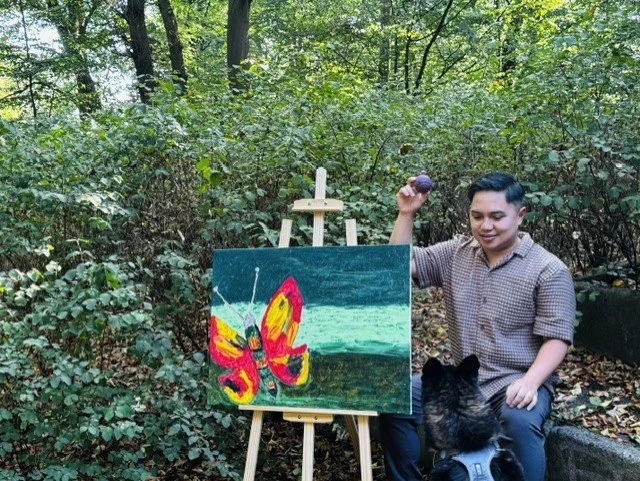
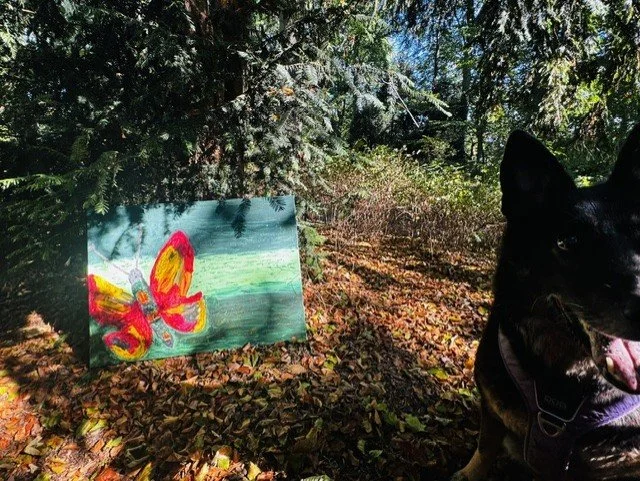
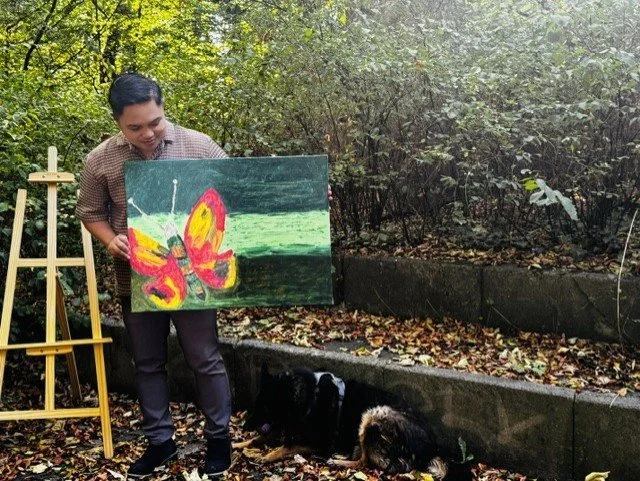
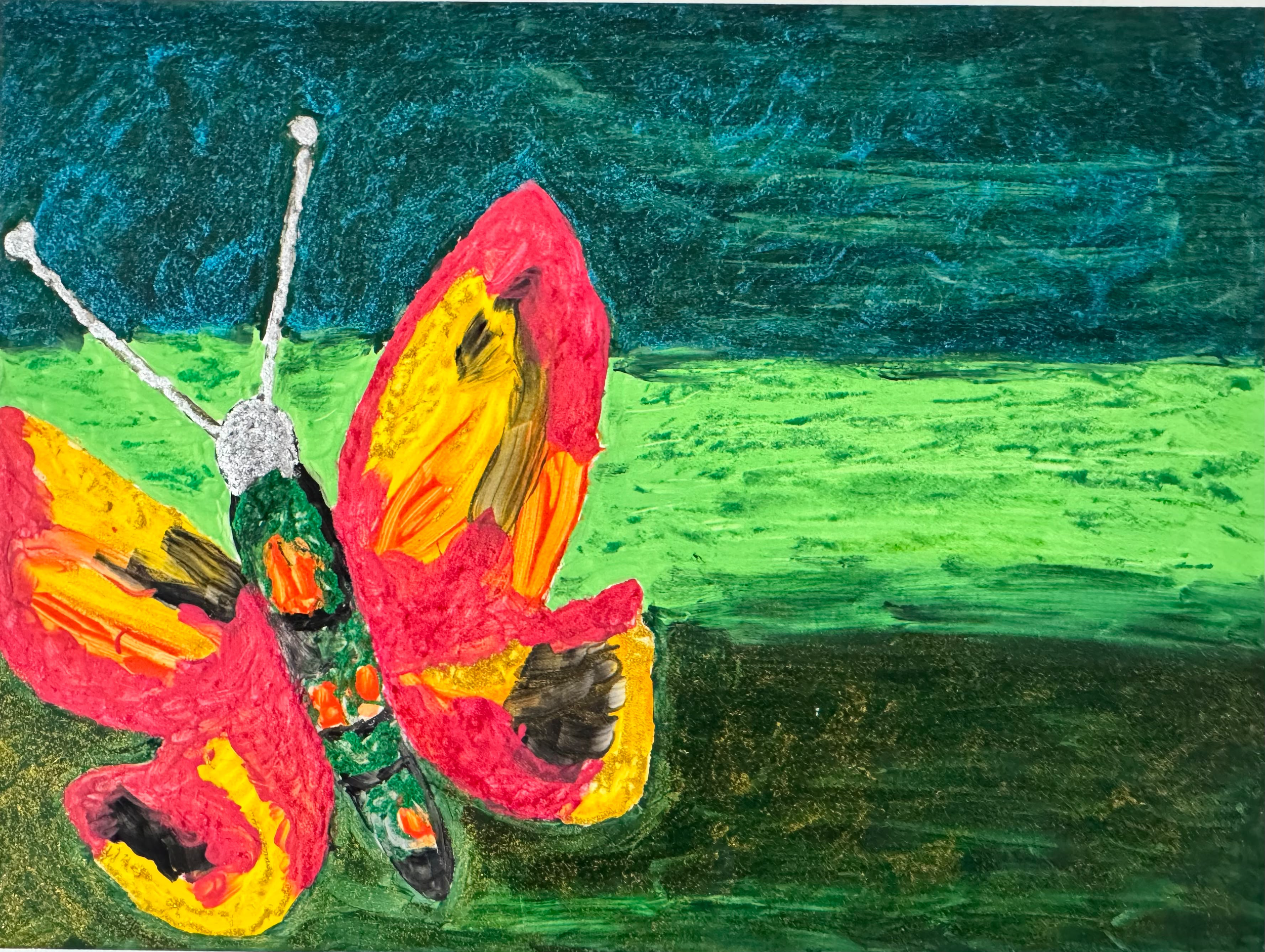
Paru was born with one wing smaller than the other.
She could fly.
Just differently.
She could not rise quickly into the treetops or race across the forest like the other butterflies. When the wind became strong, she sometimes had to land and wait.
When she was younger, everyone had advice.
"You should exercise your smaller wing."
"You should try harder."
"Maybe Lakapati can fix it."
Some meant to be kind.
Others did not.
For a long time, Paru wished her two wings were the same.
But the seasons passed.
And eventually Paru stopped wishing.
Her wing was her wing.
She had learned which winds could carry her, which leaves made good resting places, and which paths through the ferns allowed her to travel across the forest.
She did not want to be fixed.
She wanted something much simpler.
To belong.
On her own terms.
Yet the forest was not always built for butterflies like Paru.
Meetings were held high in the balete trees.
Celebrations took place above the canopy.
When danger came, everyone shouted:
"Fly!"
And when Paru could not keep up, someone always had to remember that she was still coming.
Paru had accepted her wing.
She sometimes wondered when everyone else would.
One year, the hot season arrived early.
Then it stayed.
Streams became thin.
Leaves curled at their edges.
Orchids dropped their flowers before the bees could find them.
Even at night, the earth remained warm.
The animals complained.
"The sun is too strong," said the monkeys.
"The rain has forgotten us," croaked the frogs.
"The winds have changed," said the hornbills.
Everyone agreed that something was wrong.
But nobody knew what to do.
Then, one evening, a warm breeze carried the fragrance of sampaguita through the forest.
Tiny white flowers appeared where none had grown moments before.
From between the balete trees stepped a figure clothed in vines, rice blossoms, orchids and emerald leaves.
It was Lakapati, guardian of life and all living things.
The animals rushed towards her.
"Make it rain!"
"Fill the rivers!"
"Cool the forest!"
Lakapati raised one hand.
The forest fell silent.
"I can restore the balance," she said.
The animals cheered.
But Lakapati did not smile.
"There is something you must understand."
She touched the dry earth.
"When the balance of the forest is broken for too long, restoring it can be painful."
The animals stared at her.
"What do you mean?" asked an eagle.
"The forest may need fire so that new life can grow."
The deer stepped backwards.
"Rivers may need to flood their old paths."
The wild pigs looked towards their homes beside the stream.
"Storms may have to break weakened branches so that sunlight can reach what must grow beneath them."
Nobody spoke.
"I do not wish to do these things," Lakapati said.
"But my duty is not to protect every tree exactly as it is."
Her eyes travelled across the forest.
"My duty is to protect the possibility of life."
A murmur spread through the animals.
"Give us time," pleaded the hornbill.
Lakapati nodded.
"Then I need to understand why the forest can no longer cool itself."
She looked over the gathering.
Past the eagle.
Past the hornbill.
Past the monkeys.
Until her eyes rested upon Paru.
"I need your help."
Paru looked behind her.
"My help?"
"Yes."
Paru opened her wings.
One rose higher than the other.
"You know I cannot fly very far."
"I know."
"I cannot see the whole forest from above."
"I know that too."
Paru frowned.
"Then why me?"
But Lakapati had already begun walking.
"Come."
Deep inside the oldest part of the forest stood a small bamboo hut.
Inside lay the largest banig Paru had ever seen.
It shimmered with colours that seemed to change whenever she moved.
Some strips were made from grass.
Others from leaves, feathers, bark, shells, spider silk and things Paru could not name.
Paru stepped closer.
"It is beautiful."
Then she noticed something strange.
Parts of the banig were turning brown.
Some strands had tightened until they pulled against one another.
Others had separated completely.
"What is happening?"
"This is the Banig of the Forest," Lakapati explained.
"Every strand represents a relationship."
She touched a green strip.
"Trees and rain."
A golden one.
"Flowers and bees."
A blue one.
"Rivers and fish."
Then a silver strand.
"Predator and prey."
Paru watched another thread slowly tighten.
"The forest has always changed," said Lakapati.
"But now the pattern is changing faster than many creatures can follow."
"Because the world is getting warmer?"
"Yes."
Lakapati paused.
"But something else is happening here."
She pointed towards several tangled strands.
"The creatures of this forest are making some of those changes worse."
Paru stared at the banig.
"Who?"
"That," said Lakapati, "is what I want you to discover."
The next morning, Paru began her investigation.
She first visited the eagles.
Their nests stood high above the forest.
Paru needed most of the morning to reach them.
Around every nest, branches had been broken away.
"Why do you remove so many branches?" Paru asked.
"So we can see danger approaching," replied the oldest eagle.
"And so our young have space to learn to fly."
It made sense.
But when Paru looked down, she saw great patches of sunlight reaching the forest floor.
The soil beneath them was dry and cracked.
Paru wrote it down.
Next she visited the wild pigs.
Around the remaining waterholes, they had dug away roots and plants.
"Why?" asked Paru.
"There is less water now," said a mother pig.
"We make the ponds wider so everyone can drink."
That made sense too.
But without plants to shade them, the wider pools became warm.
Water disappeared quickly beneath the sun.
Paru wrote it down.
She visited the monkeys.
They had removed leaves around their sleeping places.
"Snakes hide there," they explained.
That made sense.
But there was less shade.
She visited the hornbills.
Because fruit had become scarce, they stayed close to the few trees that still produced plenty.
"We cannot carry seeds far when our chicks are hungry," they said.
That made sense too.
But fewer seeds now reached the damaged parts of the forest.
Everywhere Paru went, she found the same thing.
A creature doing something reasonable.
Something necessary.
Sometimes something kind.
And somehow the forest kept getting warmer.
Days became weeks.
Paru grew frustrated.
One evening she returned to Lakapati's hut and dropped her notes onto the floor.
"I cannot find the one responsible."
Lakapati continued weaving.
"The eagles?"
"They are protecting their young."
"The pigs?"
"They are trying to find water."
"The monkeys?"
"They fear snakes."
"The hornbills?"
"They are feeding their chicks."
Paru sighed.
"Everyone has a reason."
Lakapati looked at her.
"Then keep looking."
So Paru returned to the forest.
This time she stopped asking:
"Who is causing the problem?"
Instead she asked:
"What happens because of what you do?"
The answers changed.
The eagles noticed that removing fewer branches still gave them enough space to watch for danger.
The pigs discovered that several smaller, shaded waterholes kept water longer than one enormous pool.
The monkeys found that they could clear narrow paths around their sleeping places without stripping entire trees.
The hornbills began taking turns carrying seeds farther into the forest while others remained near their chicks.
The changes were small.
None solved the problem.
But slowly the forest began behaving differently.
And something else happened.
The creatures began noticing one another.
The eagle saw what happened to the fern when a branch disappeared.
The pig saw what happened to the stream when roots were removed.
The monkey saw what happened to the orchid when shade vanished.
The hornbill saw what happened to tomorrow's trees when today's seeds travelled nowhere.
Paru finally understood.
She hurried back to Lakapati.
"I know what is making the forest warmer."
Lakapati stopped weaving.
"Tell me."
Paru took a breath.
"Everyone."
Lakapati said nothing.
Paru shook her head.
"No. That isn't right."
She looked at the tangled banig.
"Nobody."
Lakapati waited.
"That isn't right either."
Paru walked around the banig.
Then she saw it.
Not the strands.
The spaces between them.
"The problem isn't one creature."
She touched the place where several strands pulled against one another.
"It is what happens between us."
For the first time since Paru had arrived, Lakapati smiled.
The following morning, every creature gathered beneath the great balete tree.
This time, the meeting was not held in its highest branches.
It was held on the ground.
Paru noticed.
Nobody mentioned it.
But she noticed.
She told them everything she had learned.
There was grumbling at first.
The eagles did not like being told to leave more branches.
The pigs worried about losing access to water.
The monkeys complained about snakes.
The hornbills worried about their chicks.
Paru listened.
Then she said:
"You do not have to stop being eagles."
"You do not have to stop being pigs."
"You do not have to stop being monkeys or hornbills."
"But we cannot each make the forest perfect for ourselves and expect it to remain a forest for everyone."
Silence followed.
Then the old eagle nodded.
One by one, the others did too.
Finally a young butterfly called from the crowd.
"What about you, Paru?"
Paru turned.
"What will you change?"
The forest became quiet.
Paru looked at her smaller wing.
For years she had heard suggestions about it.
Make it stronger.
Stretch it farther.
Fly more often.
Try harder.
Be more like the others.
She slowly opened both wings.
"Nothing."
The young butterfly blinked.
"Nothing?"
"Nothing about my wing."
Nobody spoke.
Paru's voice trembled, but she continued.
"I have spent my whole life learning how to live in a forest made for creatures who move differently from me."
She looked towards the high branches where the forest meetings had always been held.
"I learned where to rest."
She looked towards the open sky where the butterflies raced.
"I learned which winds I could follow."
Then she looked at all of them.
"I learned how to change."
Paru folded her wings.
"Maybe this time, the forest can learn how to change too."
Behind her, Lakapati closed her eyes.
And smiled.
That evening Paru followed Lakapati back to the bamboo hut.
"Is that why you chose me?" she asked.
"Because I cannot fly high?"
"No."
"Because I move slowly?"
"No."
"Because I notice things near the ground?"
Lakapati shook her head.
"Then why?"
Lakapati touched Paru's smaller wing.
"Because everyone has spent your whole life asking how you must change."
Paru became very still.
"I needed someone who might remember to ask whether everyone else should change too."
Paru looked down at her wings.
For once, she did not see one large wing and one small wing.
She simply saw herself.
The forest did not become cool again overnight.
Some rains still came late.
Some storms still came too strongly.
Some trees died.
And beyond the mountains, the world continued to grow warmer.
But the creatures changed how they lived together.
The eagles left more branches around their nests.
The pigs protected the shaded pools.
The monkeys stopped stripping whole trees.
The hornbills carried seeds into damaged parts of the forest.
The butterflies planted flowers at different heights.
And when the creatures gathered to make decisions, some meetings happened in the trees.
Some beside the river.
And some on the forest floor.
The forest began to change.
Not back into what it had been.
Into something it could become.
Many moons later, Paru returned to Lakapati's hut.
She wanted to see the Banig of the Forest.
But when she entered, the room was empty.
Paru froze.
"The banig!"
She searched beneath the table.
Behind the baskets.
Under Lakapati's sleeping mat.
"It's gone!"
Lakapati laughed.
Paru stared at her.
"Why are you laughing? We have to find it!"
"I know exactly where it is."
"Where?"
Lakapati opened the door.
Outside, morning sunlight filtered gently through the canopy.
Roots crossed beneath the earth.
Moss protected the streams.
Hornbills carried seeds across the sky.
Bees travelled between flowers.
Pigs drank beneath shaded leaves.
Eagles watched from nests surrounded by living branches.
High above, butterflies danced in the sunlight.
Below them, others fluttered among the ferns.
And paths now connected them all.
Paru stared.
Slowly, she understood.
"The banig..."
Lakapati nodded.
"It was never supposed to stay inside the hut."
Paru stepped outside.
The forest stretched before her like an enormous woven mat.
Not every strand was straight.
Not every strand was equal.
Not every strand went in the same direction.
Yet each had a place.
Paru smiled.
"Did we save the forest?"
Lakapati looked towards the distant mountains.
Dark clouds were gathering there.
"The world is still growing warmer."
Paru's smile disappeared.
"Then we failed?"
"No."
Lakapati watched an eagle leave a branch untouched as a butterfly rested upon it.
"You learned something harder than how to survive a changing world."
"What?"
Lakapati looked at Paru.
Then at the thousands of different creatures moving through the forest.
"How to change together."
And beneath the great Philippine forest, one small butterfly opened two very different wings.
Nobody asked her to change them.
Paru rose gently into the morning air.
Not very high.
Not very fast.
Exactly as herself.