Pakikipagkapwa and Brain Twinning: Working towards a shared future for labour migration
5 July 2026, 9:30-11:00
Workshop Facilitators:
· Ariel Macaspac Hernandez, GIGA Institute for Global and Area Studies
· Mary Anne Deveza- Grau, PhilNetz e.V.
· Anna Karina Jardin, ArtDialogo Asia
Background
Migration between the Philippines and Germany is often discussed through the lenses of labour mobility, remittances, skills shortages, and brain drain. While these issues remain important, such perspectives frequently reduce migrants either to economic resources or to victims of larger structural forces.
This workshop proposes a different narrative. Drawing on the Filipino concept of Pakikipagkapwa (shared humanity and relationality), participants will explore how migrants, diaspora communities, families, institutions, and civil society actors can become active co-creators of more just and sustainable migration futures.
At the centre of the workshop is the concept of brain twinning. Moving beyond the traditional brain drain versus brain gain debate, brain twinning understands migration as a process of reciprocal learning, knowledge exchange, innovation, and shared development between Germany and the Philippines. Migrants are not merely moving between the two countries. They are connecting societies, institutions, experiences, and futures.
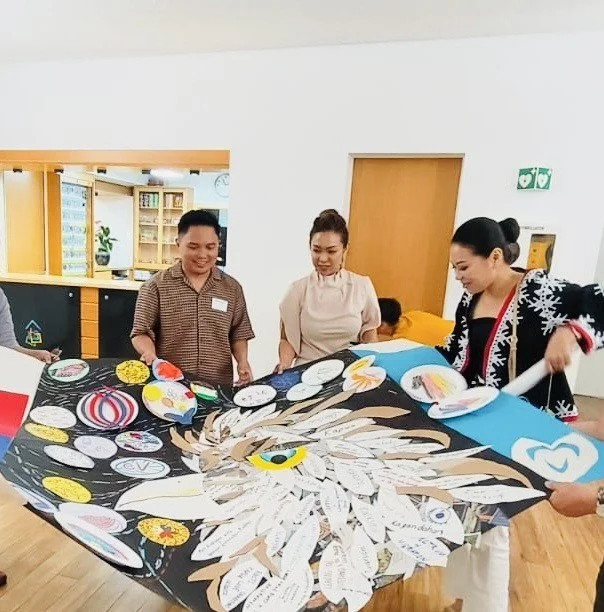
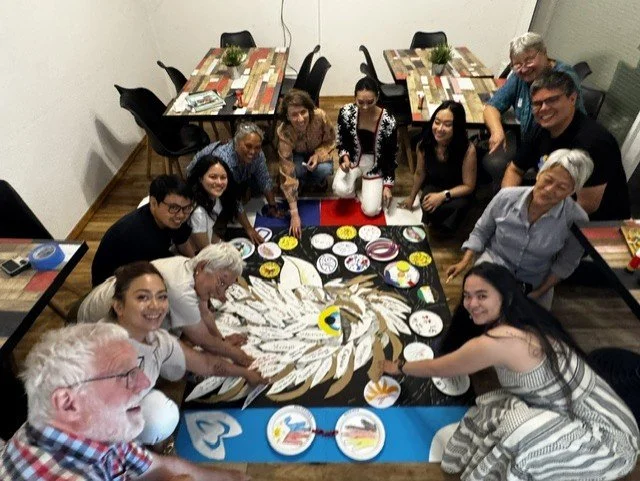
To explore these possibilities, the workshop employs an innovative methodology co-developed by the organisers that combines artistic expression, facilitated dialogue, and participatory future scenario building. Together, these methods create spaces for reflection, imagination, and collective action.
Vision
The workshop seeks to shift migration debates from narratives of victimhood, dependency, and loss towards narratives of agency, reciprocity, and shared futures. Through Pakikipagkapwa, brain twinning, and participatory foresight, participants will not simply discuss migration. They will collectively imagine and design the future they wish to build. The result is a shared vision for 2035 in which migration becomes a platform for mutual learning, transnational solidarity, and collaborative transformation between Germany and the Philippines.
Objectives
1. Strengthen Participation and Voice
· Explore how diaspora communities and interested stakeholders can engage more actively in migration-related decision-making.
· Build upon findings, recommendations, and unresolved challenges identified in previous conferences and workshops.
· Identify opportunities for greater civic participation, representation, and transnational engagement.
2. Develop Future Pathways for Brain Twinning
· Explore alternative futures for migration between Germany and the Philippines.
· Identify opportunities for mutual learning, innovation, and knowledge exchange.
· Move beyond narratives of loss, dependency, and victimhood towards narratives of agency, partnership, and co-creation.
3. Establish a Collaborative Network
· Create a working group connecting migrant workers, diaspora organisations, researchers, artists, civil society organisations, and interested stakeholders.
· Strengthen existing networks and identify opportunities for sustained collaboration.
· Develop a shared agenda for future ac3vi3es and engagement.
Conceptual Framework: Care, Reciprocity, and Repair
The workshop is structured around three interconnected pillars: Care, Reciprocity, and Repair. Grounded in Pakikipagkapwa, these pillars recognise migrants not merely as workers or policy subjects, but as active agents, bridge-builders, and contributors to shared futures.
Pillar 1: Care
Care focuses on wellbeing, dignity, belonging, and support systems across migration journeys. Migration affects different groups differently. Newly arrived migrant workers, long-established diaspora communities, and families left behind often experience distinct opportunities and challenges. This pillar explores how more inclusive systems of support and solidarity can be developed across borders.
Guiding questions:
1. What forms of support are currently missing?
2. How can different needs be recognised and prioritsed?
3. How can communities strengthen mutual care across borders?
4. How can migrants contribute to support structures and resilience?
Pillar 2: Reciprocity
Reciprocity examines migration as a relationship of mutual benefit, learning, and partnership. The concept of brain Twinning challenges one-directional understandings of migration and instead highlights opportunities for shared innovation, knowledge circulation, and transnational collaboration.
Guiding questions:
1. Who are the key actors and partners in Germany and the Philippines?
2. What interests and aspirations are shared?
3. How can knowledge and expertise circulate more equitably?
4. What new forms of collaboration can emerge between migrant communities, institutions, and societies?
Pillar 3: Repair
Repair focuses on addressing unresolved challenges and transforming lessons from the past into future action. Previous dialogues have identified recurring concerns including fair recruitment, labour rights, language barriers, social integration, family separation, and the long-term impacts of brain drain on communities of origin.
Guiding questions:
1. What actions have already been taken?
2. Which approaches have worked and which have not?
3. What barriers continue to hinder progress?
4. What practical actions can be implemented moving forward?
5. Who should be responsible for implementation?
Workshop Methodology
The workshop combines three complementary approaches:
1. Art
Artistic and visual methods create spaces for participants to express experiences, aspirations, and concerns that may not emerge through conventional discussions alone.
2. Dialogue
Facilitated conversations grounded in Pakikipagkapwa foster mutual recognition, listening, and collective reflection across generations, professions, and migration experiences.
3. Future Scenario Building
Participants will work with participatory foresight tools co-developed by the organisers to explore alternative migration futures and identify strategic pathways towards preferred outcomes. Rather than focusing exclusively on present-day challenges, participants will be encouraged to imagine what successful migration partnerships between Germany and the Philippines could look like by 2035.
Brain Twinning Roadmap 2035
The central outcome of the workshop will be the co-creation of a Brain Twinning Roadmap 2035.
Working in mixed groups, participants will develop future-oriented pathways that identify how migrants, diaspora organisations, governments, civil society, academia, and private sector actors can contribute to more equitable and mutually beneficial migration systems.
The Roadmap will address:
1. Care
· Strengthening support systems for migrants and families.
· Improving integration, wellbeing, and community resilience.
2. Reciprocity
· Enhancing knowledge exchange and transnatonal cooperation.
· Creating opportunities for joint innovation, entrepreneurship, educaton, and skills partnerships.
3. Repair
· Addressing structural barriers and unresolved migration challenges.
· Developing concrete recommendations for policy and prac3ce.
The roadmap will identify:
1. Priority actions
2. Responsible actors
3. Potential partnerships
4. Short-term, medium-term, and long-term implementation pathways
Expected Outcomes
1. Immediate Outputs
· Artistic representations of migration futures.
· Collective future scenarios for Philippine-German migration cooperation.
· Establishment of a Brain Twinning Working Group.
· Development of the Brain Twinning Roadmap 2035.
2. Strategic Outcomes
· A set of actionable recommendations for stakeholders in Germany and the Philippines.
· Stronger diaspora participation in migration governance discussions.
· New partnerships across migrant communities, academia, civil society, and policymakers.
· A practical roadmap for transforming migration into a platform for mutual empowerment and co-development.